
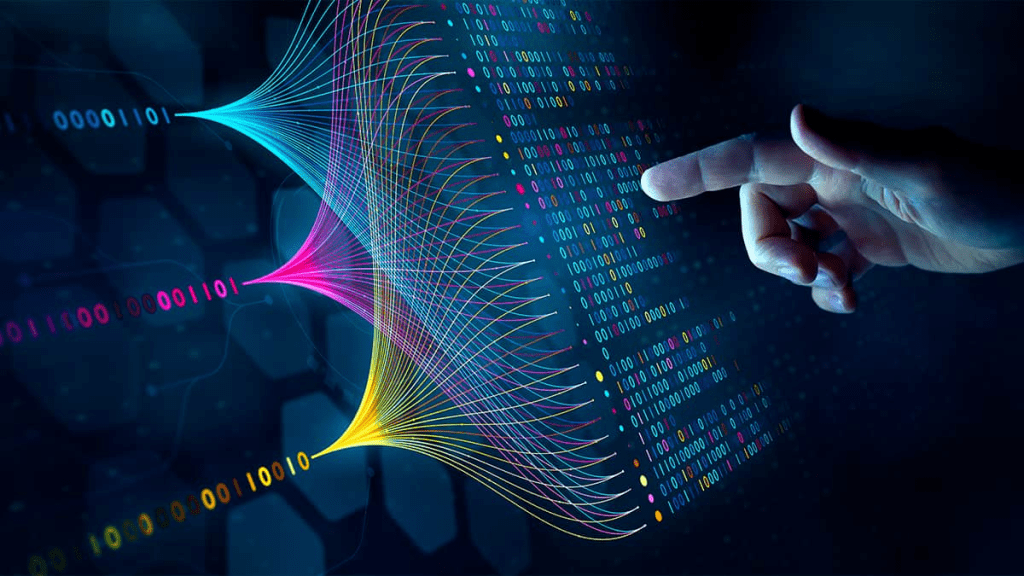
Today, it is clear that language and technology are closely intertwined. AI applications can generate human-like language and raise fundamental concerns.
According to Stefania Giannini, Assistant Director-General for Education at UNESCO (2018), “Machines can now simulate sophisticated conversations beyond narrow tasks. We are coming to understand that our monopoly on advanced language—a natural ability cultivated through education, and our species’ most defining social trait—is no longer something we can take for granted.”
She argues that we must also consider the new technologies that study our languages and generate them without explicit human direction, and therefore, unpredictably.
In addition, she emphasizes the significance of language, which sets us apart from other animals. It is central to identity and cultural diversity, giving meaning to the world and influencing our behavior. It underpins education and nearly all aspects of life. It is fundamental to love and conflict, capable of empowering and manipulating.
“How will this technology change the emotions of who we are as humans? How will it reframe our understanding of human intelligence? How will it impact our relationships with each other? We are also forced to consider the new technologies that study our languages and generate them, without explicit human direction and therefore unpredictably. Is it possible for technology that is proficient in language and learning to, at some point, develop sentience, knowledge of its own existence, and desire greater autonomy? Is it wise to hand over millennia of knowledge to machines that appear to be capable of learning and performing beyond boundaries set by humans? And what about our interactions with these machines: How should we treat them? Is it appropriate for a non-human machine to speak to an adult as if it is another person? Is this appropriate for a child? What should we think when a chatbot assumes the voice of a living or long-dead historical figure on demand and without hesitation?”
These are the questions raised by Stefania Giannini to make us think and reflect on the implications of AI on human characteristics, education, and language.
In 2023, the Brazilian Federal Congress introduced at least 46 bills to regulate the use of artificial intelligence. The proposals focus on prohibiting the use of photos, videos, and people’s voices for defamation, electioneering, and pornography. These bills are expected to be voted on in 2024.
References:
CNN Brasil. It is available at https://www.cnnbrasil.com.br/politica/congresso-tem-pelo-menos-46-projetos-de-lei-para-regulamentar-do-uso-de-inteligencia-artificial/.
Giannini, Stefania. UNESCO. Assistant Director-General for Education, 2018. It is available at https://unesdoc.unesco.org/ark:/48223/pf0000385877.
 Revista Contemporartes