
The literature on the different roles of teachers in the teaching-learning process is extensive and is primarily found in the areas of pedagogy and teacher didactics. According to Luckesi (2023), the teacher’s pedagogical act in the educational institution involves planning, executing, and evaluating the student’s entire training process. Therefore, as educators, our responsibility is to provide a supportive and nurturing environment for our students so that they can learn, develop both psychologically and cognitively, and achieve their potential (Luckesi, 2023, p. 43).

According to Loureiro (2004, p. 81-82), the educator exercises a mediating identity in the teaching-learning process: “[t]he term ‘mediation’ [although it means] mainly the act or effect of mediating; intervention, intercession, intermediary […] agency”, it extrapolates these meanings when it comes to mediation in education: “[e]very learning requires mediation and the teacher plays an important role in mediating the epistemic relationship […] agency”. ] agency”, it goes beyond these meanings when it comes to mediation in education because “[t]he whole of learning requires mediation and the teacher plays an important role in mediating the epistemological relationship […] by taking into account the elements of the student’s experiential universe”.
Vasconcellos (2003, p. 17) suggests that from a political perspective, teachers must have a comprehensive understanding of their actions to engage in transformative teaching practices. It is not enough to solely focus on implementing different pedagogical techniques.
According to Vasconcellos (2003, p. 18), changes in school activities have been related to the teacher’s teaching practice for decades. In the past, school and the teacher were highly valued as mediators of social ascension through education. However, today, there is a significant degradation in the objective conditions of schools and the subjective pedagogical work of teachers. The teacher’s role in the pedagogical process is fragmented and empty, alongside a drastic reduction in teachers’ salaries and a decline in their social status. As a result, teachers are no longer considered cultural references in society.

The process of teacher mediation, as defined by Gasparin in 2012, involves the teacher taking on the role of a facilitator, encourager, and motivator of student learning. This mediation involves utilizing pedagogical techniques that occur in the teacher’s behavior, attitude, treatment of content, relationships with students, and connections between the content and the real world. It also encompasses the social context in which the learners exist.
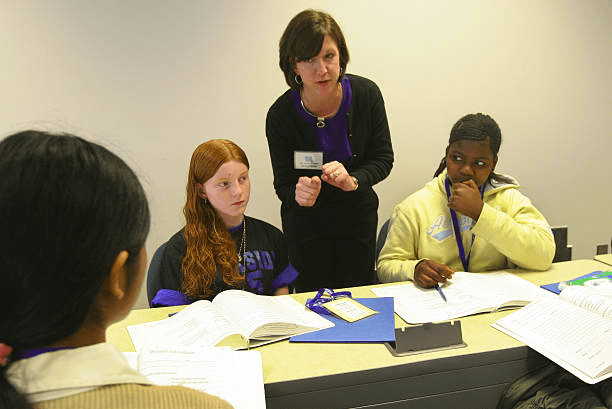
As per Gasparin (2012, p.109-110), regarding Masetto (2000), there are certain characteristics that a pedagogical mediator teacher must possess: a) Focusing on student learning and placing them at the center of the process. b) Developing joint actions with students to facilitate learning. c) Assuming a position of co-responsibility and partnership with the students. d) Having a thorough grasp of their area of knowledge. e) Being creative. f) Being open to dialog. g) Acting as a human being with their subjectivity and individuality, respecting the same dimensions in the students. h) Taking care of expression and communication as learning tools.
Paulo Freire, in his book “Pedagogy of Autonomy” (1996), explores teacher training in progressive education that promotes student autonomy. The essential knowledge for this approach includes the concept of human incompleteness, the understanding that education is more than just skill training, and the recognition that educational practice is formative.
References:
FREIRE, P. Pedagogia da autonomia: saberes necessários à prática educativa. São Paulo: Paz e Terra, 1996.
GASPARIN, J. L. Uma didática para a pedagogia histórico-crítica. 5. ed. rev. Campinas, SP: Autores Associados, 2012.
LOUREIRO, A. M. B. Professor: identidade mediadora. São Paulo: Edições Loyola, 2004.
LUCKESI, C. C. O ato pedagógico: planejar, executar, avaliar. São Paulo: Cortez, 2023.
VASCONCELLOS, C. S. Para onde vai o professor? Resgate do professor como sujeito de transformação. São Paulo: Libertad, 2003.
 Revista Contemporartes