
Authors: Thayná Pereira Pasini and Raquel Silvano Almeida*
Through hybrid physical and digital contact, the school can be integrated into the significant spaces of the city and the world. With technology, teaching and learning occur in a symbiotic, profound, and constant interconnection between the physical and digital worlds. For this reason, according to Morán (2015), formal education is increasingly blended because it takes place not only in the classroom’s physical space but in the multiple spaces of everyday life, including digital ones.

For Professor José Morán (2015), there are various types of mixtures or hybridisms in education, such as knowledge and values, when we integrate multiple areas of expertise, methodologies, challenges, activities, projects, games, etc.
The blending of technology and education as hybrid teaching, an expression that, according to Morán and Bacich (2015), is rooted in an idea of hybrid education, where there is no single way of learning and in which learning is a continuous process that takes place in different ways, in other spaces. Furthermore, the authors state that teacher-student social practices are incredibly different from what they used to be due to technology, but that even so, the way of teaching in the Brazilian context is still based on an outdated mentality, where the teacher is the sole protagonist.
However, there needs to be a change in this way of teaching because technology is already part of the school routine, which provides quick access to a large amount of information, a fact that changes the way we think and build knowledge. Therefore, classes that focus only on oral presentations tend to be shorter and shorter because they keep students attentive and focused for a short time.
From this perspective, Lankshear and Knobel (2007) state that the world works from non-material principles and logic in the virtual context, where our students’ generation is found. It is decentralized and flat. The focus is on the continuous participation of individuals and the collective as a production unit. Social relations occur in digital media, which are increasingly emerging and visible.
Despite the need and urgency for a change in the current way of teaching, the authors emphasize that caution must be exercised in the way it takes place, integrating technology into education critically and creatively because by quickly obtaining a rapid range of information, students will easily become tired and bored as well.
Thus, for Spanish sociologist Manuel Castells (2005, p. 19): “[…] Spreading the Internet or putting more computers in schools, by themselves, do not necessarily constitute major social changes. It depends on where, by whom, and for what communication and information technologies are used.”
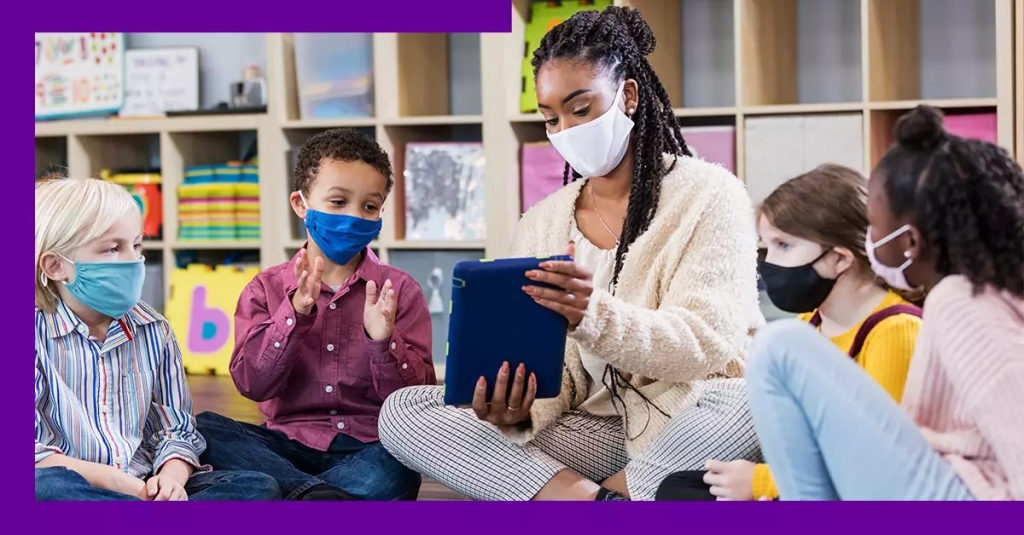
In the view of Portuguese professor António Nóvoa (2023), we now need to build new educational environments that are more open and diverse, inclusive and democratic, that induce a pedagogy of work, cooperation, research, and communication.
Another emerging contemporary perspective is digital literacy, “learning to read the digital critically”. According to Montanaro (2021), this term relates to how one can work with the interdisciplinary linguistic construction of multimodal content for the educational process. He also says that digital and digital literacy are different terms that refer to the same thing. Still, he likes literacy better because it relates to “learning to read the digital critically”.
Digital literacy is critical due to the convergence culture, which makes society mix the products (technological or otherwise) that it consumes. According to Jenkins, Montanaro presents three basic types of audiences and states that there is currently a more significant presence of the active audience. This audience not only consumes but also creates the content consumed. According to the professor, digital literacy focuses more on this type of audience.
Montanaro brings examples from films and games to show how digital literacy impacts this and demonstrates the importance of a society that can critically read any digital genre.

According to Morán (2015), “Children need to more consciously develop their knowledge and practice of the still image, the moving image, the sound image… and make this part of core learning rather than marginal. They should learn to see more openly what they are already used to seeing but don’t usually perceive in more depth.” Digital technologies can only be used in education through solid and coherent pedagogical processes.
References:
CASTELLS, M. O digital é o novo normal. Virtualidade real na pós-pandemia: um olhar no futuro. Fronteiras do Pensamento. Maio 2020. Disponível em: https://www.fronteiras.com/leia/exibir/o-digital-e-o-novo-normal. Acesso em 15 jun. 2023.
MONTANARO, P. Literacia Digital e os Novos Paradigmas da Comunicação. Palestra virtual ministrada em 2021. Disponível em: https://www.youtube.com/watch?v=R8Y3Izwpyo0. Acesso em: 13 mar. 2023.
MORAN, J.; BACICH, L. Aprender e ensinar com foco na educação híbrida. Revista Pátio, nº 25, junho, 2015, p. 45-47. Disponível em: http://www.grupoa.com.br/revista-patio/artigo/11551/aprender-e-ensinar-com-foco-na-educacao-hibrida.aspx. Acesso em: 10 fev. 2022.
NÓVOA, A. Entrevista concedida à Fundação Telefônica Vivo em 02 de janeiro de 2023. Disponível em: https://www.fundacaotelefonicavivo.org.br/noticias/para-antonio-novoa-o-digital-e-um-meio-poderoso-para-reforcar-a-democracia-na-educacao/. Acesso em: 20 mar. 2024.
*Autoras: Thayná Pereira Pasini é licencianda em Letras Inglês na Universidade Estadual do Paraná, Unespar, campus de Apucarana, PR. Raquel Silvano Almeida é doutora, docente e pesquisadora no curso de Licenciatura em Letras Inglês da Universidade Estadual do Paraná, Unespar, campus de Apucarana, PR.
 Revista Contemporartes