
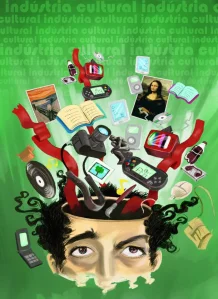
Technological and scientific transformations have accelerated industrial production technologies and the field of microelectronics. Research into genetic engineering has led to cures for various diseases and innovations in food production. Information technology and cyberspace have generated different forms of employment in a lot of work. In leisure and culture, we are witnessing a euphoria for consumerism with various entertainment options. This panorama confirms that the quest for maximum satisfaction of man’s material needs has never been so sought after in previous societies.
On the other hand, innovations in technology and science have consequently contributed to a series of changes in human social relations and the concept of the subject. In this respect, Giroux’s (1997, p. 111) critique of modern society emphasizes that “the development of technology and science, built according to the laws of capitalist rationality, has introduced forms of domination and control,” making “human emancipation” increasingly difficult.
As a result of these new human relationships, education and culture are fighting a battle between old and new concepts of knowledge, pedagogical changes, and different interests in student education. According to Lyotard (2004), “machine language” has affected scientific research and the transmission of knowledge so that knowledge has become fragmented into quantities of information. The hegemonic standards of the computerized “culture industry” impose themselves on the world of information, and any statement can be accepted as “knowledge”. The mass culture produced by this industry, never before so present in people’s lives, is instrumentalized and mediated by the mass media. These vehicles propagate a culture consisting of emergency consumer values and the technical rationality of knowledge.
Therefore, this logic of modern industrial society is widely perceptible in the role that is eminently established for educators today. In the view of Marx’s historical-dialectical materialism, when man entered the company and capitalist organizations, the natural character of work was removed from the human condition. And education is not, and never has been, neutral to this condition. The school produces and reproduces this condition, and teachers, like workers, come to be considered a resource, a tool; in short, a part of an enormous cog in the wheel.

Given this, what kind of teacher is in the interests of capital? Is it the one who embraces teaching and research methods to pursue a predominantly instrumental reason? Or is it the one who rebels against an entire system and becomes a thinking, restless, questioning being who proposes a dialectic between common sense and scientific knowledge to his student? In schools and higher education institutions, are teachers educating their students to act in society as automatons and robotized individuals according to the demands of the job market? Or are they helping students obtain the political and cultural tools necessary for a permanent critique from the perspective of human emancipation?
From the point of view of critical-reproductive theory, Bourdieu and Passeron (1975) focus on the action of symbolic violence on the education system and its interference with elaborated culture. The channels of communication, which form public opinion, conceal the existing cultural domination of the subject. Students come to the classroom incorporated into media cultures, with information and content that is taught daily by the media. So, what educational theories and pedagogical approaches do foreign language teachers rely on to use the media in the teaching and learning process?
In the school environment, there are various positions on using media resources in the classroom. On the one hand, there are the teachers who refuse to use them for multiple reasons, such as lack of technical knowledge, a pessimistic or apocalyptic view of the media, and also those who prefer to continue with the traditional stance, limited to the chalkboard and the textbook, supported by rigid discipline, order and structural content devoid of the elements that advocate its socializing function.
In addition, from the technical perspective of using media resources in teaching, there are those teachers who opt for an approach that tries to maintain the “truths” instilled in the cultural productions of the media (reproducing values, beliefs, and stereotypes of man and society) without strategies or criteria for use. In this way, the media are dictators of rules and methods, organizers of tasks, controllers of teaching and learning in the classroom, providing content and activities in advance, leaving the teacher and student with the task of mere executors.
On the other hand, educational institutions’ overuse of these resources is worrying because they are often introduced into school and academic activities without knowledge and a critical sense. In this way, the use of these technological means occurs under the belief that the teaching and learning environment is being adapted to the “electronic and digital world” outside the school, of which the new generation of students is a part. So, how can teachers use media resources in their students’ cultural and educational development to provide a critical analysis of the content they convey?
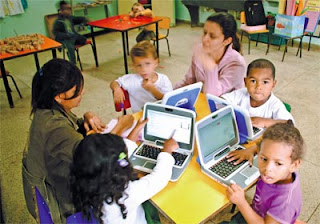
The critical debate on mass media cultural products is based on studies by Kellner (2001), Zuin (1994), Baudrillard (1985), Morin (1967), Giroux (1997), and Silva (2002). From this perspective, a pedagogical-critical methodology for working with media resources in a teaching and learning context is proposed by Penteado (1998), Porto (1998), and Martirani (1998), who emphasize the need to develop an “education for the media”. In foreign language teaching, researchers such as Moita Lopes (1996) and Wielewicki (2002) also emphasize, through studies and research, the need for educational action in the development of foreign language teachers aimed at teaching that favors the critical development of the student concerning the ideology of linguistic hegemony propagated by the cultural industry.
In sum, the theoretical-methodological basis of Cultural Studies points to critical media pedagogy. Therefore, in light of essential media pedagogy, language teachers can be intellectual agents who transform subjects within the social reality in which they work: school or higher education.
References:
BAUDRILLARD, J. À sombra das maiorias silenciosas: o fim do social e o surgimento das massas. São Paulo: Brasiliense, 1985.
BOURDIEU, P.; PASSERON, J. C. A reprodução. Elementos para uma teoria do sistema de ensino. Rio de Janeiro: F. Alves, 1975.
GIROUX, H. Os professores como intelectuais. Porto Alegre: Artmed, 1997.
KELLNER, D. A cultura da mídia: estudos culturais: identidade e política entre o moderno e o pós-moderno. Bauru: EDUSC, 2001.
LYOTARD, J. F. A condição pós-moderna. 8. ed. Rio de Janeiro: J. Olympio, 2004.
MARTIRANI, L. A. O vídeo e a pedagogia da comunicação no ensino universitário. In: PENTEADO, H. D. Pedagogia da comunicação: teorias e práticas. São Paulo: Cortez, 1998. p. 168.
MOITA LOPES, L. P. da. Oficina de lingüística aplicada: a natureza social e educacional do processo de ensino/aprendizagem de línguas. Campinas, SP: Mercado das Letras, 1996.
MORIN, E. Cultura de massas no século vinte: o espírito do tempo. Rio de Janeiro: Forense, 1967.
PENTEADO, H. D. Pedagogia da comunicação: sujeitos comunicantes. In: PENTEADO, H. D. Pedagogia da comunicação: teorias e práticas. (Org.). Pedagogia da comunicação: teorias e práticas. São Paulo: Cortez, 1998. p. 13.
PORTO T. M. E. Educação para a mídia: pedagogia da comunicação: caminhos e desafios. In: PENTEADO, H. D. Pedagogia da comunicação: teorias e práticas. São Paulo: Cortez, 1998.
SILVA, T. T. da. Documentos de identidade. Belo Horizonte: Autêntica, 2002.
WIELEWICKI, V. H. G. Literatura e sala de aula: síncopes e contratempos. A agência discente e as literaturas de língua inglesa em cursos de licenciatura em Letras. 2002. Tese (Doutorado)-Universidade de São Paulo, São Paulo, 2002
ZUIN, A. A. Seduções e simulacros: considerações sobre a indústria cultural e os paradigmas da resistência e da reprodução em Educação. In: PUCCI, B. Teoria Crítica e Educação: a questão da formação cultural na Escola de Frankfurt. Petrópolis, RJ: Vozes, 1994. p. 153-174.
Images:
It is available at https://intervencaocsp16.wordpress.com/2013/09/02/a-industria-cultural/. Access on October 10th, 2023.
It is available at https://revistapegn.globo.com/Startups/noticia/2022/08/startups-de-educacao-focam-no-ensino-basico.html. Access on October 10th, 2023.
It is available at https://educacao-e-tecnologias.blogspot.com/2010/06/tecnologia-na-educacao-infantil_13.html. Access on October 10th, 2023.
 Revista Contemporartes