
We consider Edgar Morin’s (1995; 1996) studies on inter and transdisciplinarity to be of academic relevance and theoretical and methodological improvement for teachers in initial education and teacher educators. The historical and epistemological understanding of the fragmentation of knowledge leads us to reflect on science, social reality, and the subject.
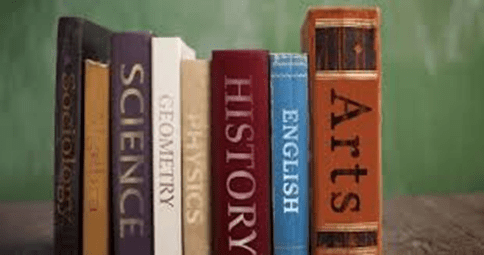
From modernity until today, scientific knowledge has been based on the separation between scientific and humanistic cultures and between object and subject. Historically, we have a science based on the principles of positivist, reductionist, rationalist, and deterministic logic. Therefore, a compartmentalized science values hyper-specialization.
These principles are grounded on a dualistic paradigm of separation between subject and object. Consequently, we have a dualistic, reductionist, determinist, and fragmenting education when it isolates and separates knowledge into curriculum subjects.
In the assumptions brought by Edgar Morin from 1960, we have the epistemology of complexity. Known as the epistemological reform of knowledge, the complex look at the phenomena of our daily reality; within a new rationality imbued with dialogical thinking.
This “expansion of our consciousness” makes us look for alternatives to the classical scientific paradigm. Hence, we arrive at a reform of thinking, which goes from linear to complex, open rationality, which denies single, absolute, total, and binary thinking.
Given this, we have the transdisciplinary methodology proposed by Basarab Nicolescu (2002) and adopted by Morin (1995), which comprises contextualized, multidimensional, multicultural, transversal, and transdisciplinary knowledge.
According to Morin (1996), transdisciplinarity is the practice of complex thinking in education, in which there is a constant dialogue with reality, a reconnection of fragmented knowledge (disciplinary) through multiple readings, meta-points of view, and the dialogic of meta-themes: nature, life, knowledge, ideas, humanity, and ethics.

“Transdisciplinary teaching” should be able to work on the teachers and their students as the cognitive operators for “complex thinking.” It makes teachers obtain different degrees of perception about their teaching and students. This teaching must make students capable of organizing their knowledge, teaching the human condition, teaching how to live, and remaking a school of citizenship.
Morin suggests that teachers work with complex thinking in the classroom through educational meta-themes: the world, the Earth, life, humanity, languages, civilizations, literature, arts, cinema, history, adolescent cultures, and the reconnection of knowledge.
As a teacher educator in an undergraduate course in English Language Teaching, I have been working with methodological proposals for language teaching and learning for middle and high schools from the perspective of inter and transdisciplinarity. During the pandemic period, 2020 and 2021, I coordinated a Pedagogical Internship Program. I proposed to future teachers to analyze the presence (or not) of transversality in the textbooks presented by the Brazilian Education Ministry.
We studied the proposal of a transversal curriculum that encompassed the areas of English Language and Arts. To this end, the students planned and implemented recommendations for inter and transdisciplinary classes in public education for middle and high schools.
Finally, I acknowledge the significant contribution of transdisciplinarity and complexity to my continuing education and, therefore, to the development of future language professionals.
REFERENCES:
MORIN, E. Introdução ao pensamento complexo. Lisboa: Instituto Piaget, 1995.
MORIN, E. et al.. O problema epistemológico da Complexidade. Sintra/Portugal: Publicações Europa-América, 1996.
NICOLESCU, B. Educação e transdisciplinaridade ll. Brasília: UNESCO, 2002.
PETRAGLIA, I. MORAES, M. C. Interdisciplinaridade e Transdisciplinariade em Educação: convergências, divergências, complementaridade. Centro de Estudos e Pesquisas Edgar Morin, São Paulo: 2023.
IMAGES:
It is available at https://noahwebstereducationalfoundation.org/what-are-the-essential-school-subjects/
It is available at https://citl.news.niu.edu/2020/11/17/transdisciplinary-interdisciplinary/
 Revista Contemporartes