

Santa Claus or Santa, in English, derives from the Dutch term ‘Sinter Klass’, which is culturally also called Saint Nicholaus. Its tradition remotes Nordic and Germanic traditions—places where it’s pretty cold during the year.
As in the Protestant tradition, the older man, Saint Nicholaus, brings presents to kids for Christmas just as the three Kings did on Christmas night when Jesus was born.
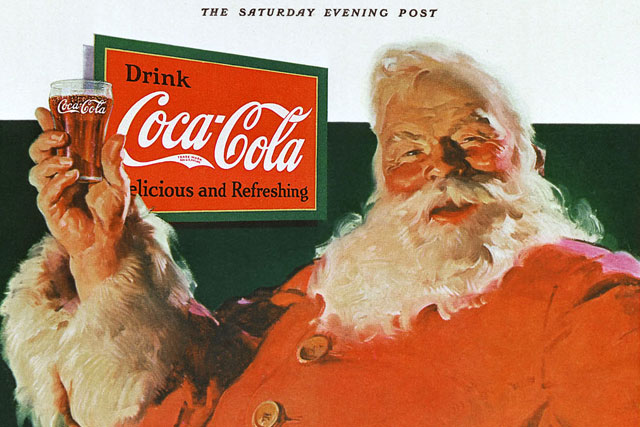
There are two marketing genesis behind Santa Claus: One regards the chubby older man with a white beard and red winter suit who first appeared in the North American magazine ‘Harpers Weekly’ in 1881.
But a while later, in 1931, cartoonist Haddon Sundblom used the image in a Coca-Cola commercial and added a bag of presents and a hat. With humorous advertisements of Santa Claus handing out presents worldwide, the soft drink brand boosted sales and made much money.
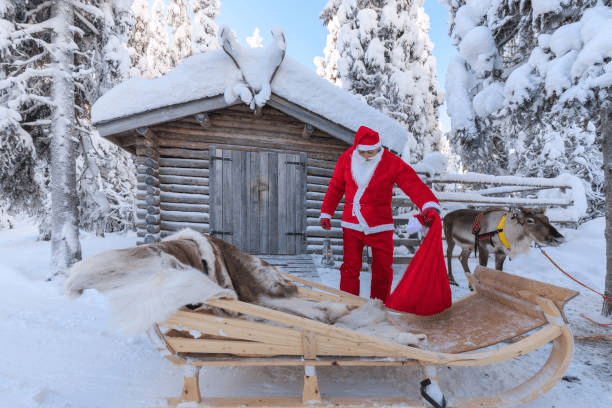
What about the North Pole? This came about as a strategy by Finland to stimulate local tourism. In the 1950s, the Finnish government built a village in Lapland, which would become the older man’s home.
What about Santa in the tropical hemisphere? What is Brazilian Santa like? Let’s figure it out! Let’s imagine a full Brazilian representation of this Christmas character. No warm clothing, no boots, no snow, no sled, no reindeer, and so on.
We would have a long-beard older man on the beach, sitting on the sand, drinking some coconut water, under a palm tree, right?
Cultural representations must stick to local traditions and beliefs. According to Corbett & Fleury (2010, p. 05), there should be a democratic coexistence between cultures, seeking integration between them without canceling their diversity, that is, “fostering the creative and vital potential resulting from the relationship between different agents and their respective contexts”.
Then, why have tropical countries historically decorated houses, shopping malls, stores, and so on with the countries of the north marketing niches at Christmas time?
It is time to reinvent Santa Claus or the Brazilian ‘Papai Noel.’ Educate our kids about building the notion of the “I” and the “other.” Tell them foreign culture encompasses ideological issues and the imposition of alien values, on which we need to discuss, reflect, and dialogue.
We all know Santa is just a folk character. Still, we must be aware that it is essential to perceive the culture of the other (from abroad) to recognize and respect it while valuing our cultural representations and values.

References:
BRASIL de Fato. Fatos Curiosos da História. De onde surgiu Papai Noel?22 de dezembro de 2016. https://www.brasildefato.com.br/2016/12/22/fatos-curiosos-da-historia-or-de-onde-surgiu-papai-noel#:~:text=J%C3%A1%20o%20nome%20Papai%20Noel,Nicolau%20era%20chamado%20em%20holand%C3%AAs.
CORBETT, J. Intercultural Language Activities. Cambridge Handbooks for Teachers. Cambridge: CUP, 2010.
Images:
It is available at https://www.campaignlive.co.uk/article/coca-cola-christmas-30s/1108708
It is available at https://www.gettyimages.com.br/fotos/lapland-
It is available at https://br.pinterest.com/pin/248190629438462932/
 Revista Contemporartes