

The globalization of English and its cultural, political, economic, and social implications have sparked discussion among linguists and researchers of this phenomenon. According to Pennycook (1994), “English teaching seems omnipresent in the world, playing a role everywhere on a grand global scale in the complexities of people’s lives”.

For Kachru (1983), the imposition of the English language and its culture on the world is based, above all, on the current political, economic, and technological situation of the native-speaking countries, which gives this language the status of a “hegemonic language” in the eyes of the Universalists.
Pennycook points out that English is in the media. In this respect, Souza (1991, p. 79) believes that the role of the media in disseminating a foreign language is evident in two ways: firstly, “in the introduction of alien terms, expressions, and ideas, generally linked to consumer interests,” and secondly, “in strengthening the prestige of a foreign language over others, leading a large part of the population, especially young people, to take an interest in learning it.”
This hegemony, however, has been problematized in terms of its “natural,” “neutral” and “beneficial” character. Pennycook (1994) says that the world first went through colonialist expansion, then through the development of independent colonies, and now through the international free market, which means that language and its teaching and learning are considered intrinsically relevant to the world, as a critical aspect of global development and a freely traded commodity on world markets. As a result, we need to understand the globalization of this language and its relationship with the classroom, education, culture, and the materiality of its imposition on students, the complex implications of their eventual “success” in and through the English language. For these reasons, Pennycook (1994) asserts that we cannot exclusively see the naturalness, neutrality, and benefits of English.

Gimenez (2001) states that the adoption of English as the foreign language taught in Brazilian school curricula is not only because it is recognized as an “internationally spoken language, linked to globalization, the economy, and technology. For today’s society, English is an object of consumption” Gimenez (2001, p. 127-128).
As for Jordão (2009), because English is now considered an international language, it seems to have become a valuable cultural capital, a commodity with a high investment and consumption value. The potential of this language, in the current economic context, lies in placing those who master it in a position of power over others and, therefore, those who will prosper in the accumulation of valuable capital in consumer society. Furthermore, Jordão argues that in the “English industry,” the native speaker is also considered a high-value product on the market since the language gives them a heritage and a historically cultural and economic inheritance.
Therefore, in the most recurrent discourses concerning the consumption of English as a commodity (commodification), it is argued that this is a language of global scope, which provides the citizen of the globalized world with professionalization, inclusion in the job market, acquisition of goods, travel, in short, all the attributes that are capable of giving them a privileged social status in this consumer society. Here we return to Bauman’s (2004) idea that “in the consumer’s race to reach the desired product”, the English language is now considered a “plus” to get ahead at the finish line.
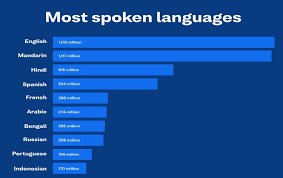
In this way, we can say that in today’s consumer society, English is a cultural consumer product for global citizens, from which they seek a “place in the sun”- a sense of belonging in this society.
Following on from this discussion, English language teachers should realize that it is necessary today to understand the processes of globalization of English and its cultural and political implications so that we can reflect on the historical (im)position of this language in the world to contribute to a greater understanding of our teaching work in the face of current events.
REFERENCES
BAUMAN, Z. Liquid Modernity. USA: Blackwell Publishing Inc., 2004.
GIMENEZ, T. Políticas governamentais, mídia e ensino de línguas estrangeiras. In: Contribuições na área de línguas estrangeiras. Londrina: Eduel, 2005.
JORDÃO, C. M. English as a foreign language, globalisation and conceptual questioning’,Globalisation, Societies and Education,7:1,95 — 107, 2009
KACHRU, B. B. The other tongue: English across cultures. Oxford: Pergamon Press, 1983.
PENNYCOOK, A. The cultural politics of English as an international language. London: Longman, 1994.
SOUZA, A. J. de. Geografia lingüística: dominação e liberdade. 2. ed. São Paulo: Contexto, 1991.
IMAGES:
It is available at https://ednastics.com/learn-english-connect-with-the-world/
It is available at https://www.economist.com/business/2014/02/15/the-english-empire
It is available at https://newsonair.gov.in/News
 Revista Contemporartes