
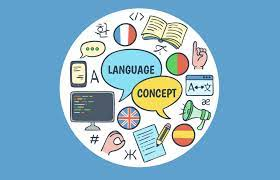
Over the past years, language teaching and learning have evolved to more contemporary methods derived from a new scenario of technological advancements and the learner-centered approach.
According to Larsen-Freeman and Anderson (2011), methods encompass remarkable aspects regarding language teaching and learning as follows:
I. Methods serve as an issue for reflection that can aid teachers in bringing to conscious awareness the thinking that underlies their actions.
II. By exposing teachers to methods and asking them to reflect on the principles of those methods and actively engage with the techniques can help teachers become clearer about why they do what they do.
III. They become aware of their own fundamental assumptions, values, and beliefs. In turn, reflective teachers can take positions on issues that result in the improvement of the society in which they live.
IV. A knowledge of methods is part of the knowledge base of teaching.
On the other hand, those authors argue that methods may imply a few drawbacks to language teachers unless they are aware of these. Some say that methods are prescriptions for classroom behavior, and that teachers are encouraged by textbook publishers and academics to implement them whether or not the methods are appropriate for a particular context (Pennycook, 1989). Others have noted that the search for the best method is ill-advised (Prabhu, 1990; Bartolome, 1994); that teachers do not think about methods when planning their lessons (Long 1991); that methodological labels tell us little about what really goes on in classrooms (Katz, 1996); and that teachers experience a certain fatigue concerning the constant coming and going of fashions in methods (Rajagopalan, 2007).
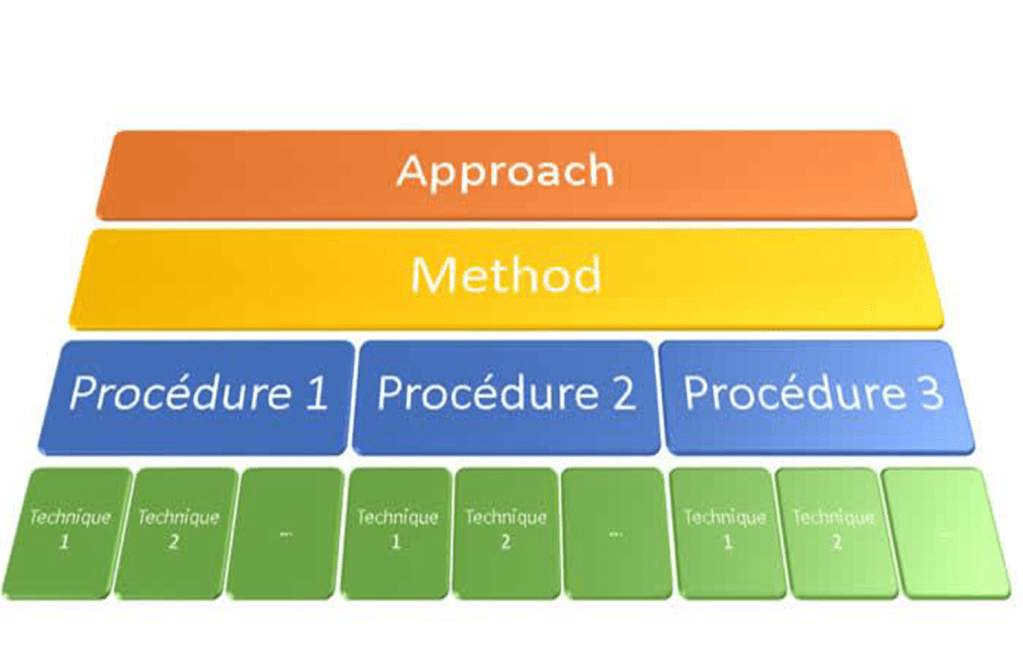
Jeremy Harmer (2007) exposes the concept of a method as the practical perspective of an approach involving types of activity, roles of teachers and learners, kinds of material, and syllabus organization. Methods include various procedures and techniques. A method consists of approach(es), procedure(s), and technique(s). Approaches are theories about the nature of language and language learning which are sources of the way things are done in the classroom and the reasons for doing them. Procedures are an ordered sequence of techniques of a method which can be described such as First you do this, then you do that. And techniques are the application of single activity e.g. silent viewing (the teacher plays the video with no sound).
In recent years, language teachers have been engaged in more updated methods, particularly, those that entail principles and approaches related to new curriculum guidelines, such as the Brazilian Base Nacional Comum Curricular (2018):
Communicative Language Teaching (CLT) focuses on language as a communicative function; notions (information and contents) of language expressed and communicative functions (practical use of language) people perform with language.
Genre-based approach and Multiliteracy focus on language as a social function, and discourse as social practice.
Intercultural approach focuses on language and culture intrinsically related to one another.
Active methodologies and Project-based learning focus on active language learning by the student. PBL is an instructional approach that contextualizes learning by presenting learners with problems to solve or products to develop.
Moreover, the postmethod pedagogy recognizes the teacher’s previous and current knowledge, and their potential to teach and act autonomously, which promotes the ability of the teacher to know how to develop a reflective approach to his/her own teaching, how to analyze and evaluate his/her own teaching acts (KUMARAVADIVELU, 2001).
In short, Brazilian applied linguist José Paes de Almeida Filho (2010) has stated once that the most appropriate methods for teaching English are those of each teacher, as long as he or she recognizes which method he or she has in practice and which approach, philosophy, or family it belongs to. Often the teacher cannot explain where he or she gets the teaching he or she produces, but that doesn’t mean he or she doesn’t have a philosophy or approach to teaching.

REFERENCES:
ALMEIDA FILHO, J.P. Os melhores métodos são os de cada professor. Entrevista. UnB, 2010.
HARMER, J. The practice of English language teaching. 4th edition. England: Longman Pearson, 2007.
KUMARAVADIVELU, B. Toward a Postmethod Pedagogy. TESOL QUARTERLY Vol. 35, No. 4, Winter 2001 537
LARSEN-FREEMAN, D.; ANDERSON, M. Techniques and principles in language teaching. 3rd Edition. Oxford: Oxford University Press, 2011.
IMAGES:
Available at: https://gurmentor.com/best-language-learning-methods/
Adapted from HARMER, J. The practice of English language teaching. 4th edition. Longman Pearson, 2007, p. 62.
Available at: https://blog.elevaplataforma.com.br/promover-a-participacao-dos-alunos/
 Revista Contemporartes