
antes de existir computador existia tevê
antes de existir tevê existia luz elétrica
antes de existir luz elétrica existia bicicleta
antes de existir bicicleta existia enciclopédia
antes de existir enciclopédia existia alfabeto
antes de existir alfabeto existia a voz
antes de existir a voz existia o silêncio [...]
homem pedra planta bicho flor
luz elétrica tevê computador
batedeira, liquidificador
vamos ouvir esse silêncio meu amor                                         amplificado no amplificador
do estetoscópio do doutor
no lado esquerdo do peito, esse tambor
In rhymes and verses, Brazilian singer and songwriter Arnaldo Antunes takes us back, in a brief timeline glance, by reporting from the prehistoric life to the contemporary technological advancements.
Food for thought: how has technology played its part in Education?
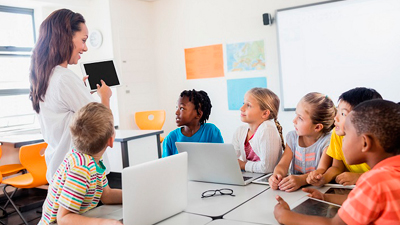
“The increasing integration between the classroom and virtual environment is essential to open the school to the world and bring the world into the school.” Professor José Moran’s assumption in 2015 leads us to reflect upon the outmost emergency for the appropriation of Information and Communication Technologies – ICT by schooling and higher education professionals in the current setting.
We must recognize that our children and our students were born in this technological society – they are the so-called “digital natives”. From day to night, they become familiar with all the communication and digital information resources, such as: chat, email, twitter, facebook, instagram, whatsapp, among other endless social communication networks available on the internet. Therefore, it is needless to say that ICT has already provided all of us, even outside the schooling setting, hybrid ways of socially living, teaching, learning and building knowledge
Hybrid teaching consists of the union of personal and face-to-face learning styles and processes with technological tools which are pedagogically effective. Moran addresses to the fact that “teaching is also hybrid, because it is not reduced to what we intentionally plan institutionally. We learn through organized processes, along with open and informal processes. We learn when we have a teacher and we learn by ourselves, from mates, and from strangers. We learn intentionally and we learn spontaneously ”.
In this mean, I see that although society has evolved into hybrid forms of knowledge building with the advancements of technology, schools and colleges keep on teaching in isolated-individual frameworks, with no ICT tools neither hybrid learning designs.

A few years ago, I co-supervised a university-school partnership study carried out by two female high school students in a public school in Londrina, which sought to investigate and understand the perceptions of teachers and students regarding the use of ICT for school teaching and learning. The results revealed that school does not effectively incorporate technologies as a means for teaching and learning, although their pedagogical use is within the school’s pedagogical project.
All in all, it is an urge request for our Brazilian educational system to provide new and different forms of learning among students, which effectively integrate virtual technologies, since traditional pedagogical practices may be meaningless for our students now.
References:
ALMEIDA, R. Educação e tecnologia: por quê integrá-las. Tribuna do Norte, Apucarana, 21 maio 2016.
ALMEIDA, R. ; Gimenez, T. ; Bueno, T. O ; Morais, A. Z. O uso das tecnologias de informação e comunicação para a aprendizagem colaborativa: percepções de alunos e professores do ensino médio de uma escola pública de Londrina. In: Luciana Cabrini Simões Calvo; Michele Salles El Kadri; Denise Ismênia Bossa Grassano Ortenzi; Kleber Aparecido da Silva. (Org.). Reflexões sobre ensino de línguas e formação de professores no Brasil. 5ed.São Paulo: Pontes, 2013, v. 1, p. 7-451.
ANTUNES, A. O Silêncio. Canção do álbum musical “O Silêncio”. Gravadora: BMG Ariola, 1996.
MORAN, J.; BACICH, L. Aprender e ensinar com foco na educação híbrida. Revista Pátio, nº 25, junho, 2015, p. 45-47. Available at: http://www.grupoa.com.br/revista-patio/artigo/11551/aprender-e-ensinar-com-foco-na-educacao-hibrida.aspx. Access: 10 Feb. 2022.
Images:
Available at: https://abstartups.com.br/como-tecnologia-pode-melhorar-educacao-brasileira/
Available at: https://www.somoseducacao.com.br/ensino-hibrido-na-pratica/
Note: This article was published in Unespar’s English Newsletter on April 16th, 2020. Available at: https://unesparenglishnews.wixsite.com/newsletter/copia-the-way-we-are
 Revista Contemporartes